NO MAXIMUM
There is no top temperature
HSE says there is no law for a maximum working temperature, because every workplace is different. Employers must still provide a reasonable indoor temperature.
Check your situation doodleshorts
HOT DAYS AT WORK
There is no legal maximum temperature for work.
Check your situation
NO MAXIMUMbut heat is a hazard
The Health and Safety Executive says heat is a hazard like any other, so employers must assess it and act. Relaxing a formal dress code is one of the steps it suggests. Here is what the official guidance says.
Updated
THE SHORT ANSWER
The law asks for a reasonable temperature.
How employers get there is up to them.
NO MAXIMUM
HSE says there is no law for a maximum working temperature, because every workplace is different. Employers must still provide a reasonable indoor temperature.
Check your situationDRESS CODES
Among the steps HSE suggests employers consider: relaxing formal dress codes, flexible or early starts, fans, blinds and moving desks out of direct sun.
What to ask forOUTDOORS
For outdoor work, HSE suggests rescheduling to cooler times, more frequent breaks, shaded rest areas and free access to cool drinking water.
Sun and skinGeneral information only, not legal advice. For advice on your own situation, speak to a qualified lawyer or a free advice service.
A QUICK SITUATION CHECK
Pick the situation closest to yours to see what official guidance says. The bar shows how much action the guidance points to.
Based on HSE's Temperature in the workplace guidance and the Government Equalities Office guide Dress codes and sex discrimination (2018). General information, not legal advice.
TWO NUMBERS WORTH KNOWING
The guidance sets a minimum indoors.
Above that, it is down to assessing the risk.
16°C
Indoor workplace, normal work
The Approved Code of Practice on the Workplace Regulations suggests indoor workplaces should normally be at least 16°C.
MINIMUM · HSE
13°C
Indoor work with rigorous effort
Where much of the work involves rigorous physical effort, the suggested minimum is 13°C. There is no matching maximum for hot weather.
PHYSICAL WORK · HSE
HSE explains that no meaningful upper limit can be set because many indoor workplaces, such as bakeries and foundries, are hot all year because of the work itself.

FOUR THINGS YOU CAN DO
HSE's advice for workers starts with what you can change yourself, then what to raise with your employer.
Add or remove layers depending on how hot you are, within your workplace's rules.
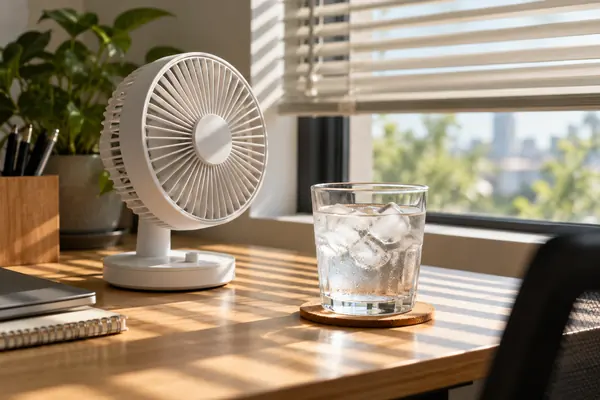
Use a desk fan, close the blinds and work away from direct sunlight or hot machinery where you can.
HSE suggests plenty of water, avoiding caffeinated or fizzy drinks, and regular breaks to cool down.
Report uncomfortable temperatures to your manager or workplace representative, and ask whether the dress code can be relaxed.
SUN AND SKIN
For people working outdoors, HSE warns that too much sunlight can cause sunburn, blistering and skin ageing, and in the long term an increased risk of skin cancer.
Weather can also affect safety, for example when handling machinery. HSE asks employers to make sure outdoor workers can recognise the early symptoms of heat stress.

Questions
No. HSE says there is no law for maximum working temperature, because every workplace is different. Employers must keep temperatures reasonable and treat heat as a hazard to be assessed and controlled.
Yes. Relaxing formal dress codes is one of the measures HSE lists for employers to consider when workers find temperatures uncomfortable.
Government guidance says policies do not have to be identical, but the standards should be equivalent. Less favourable treatment because of sex could be direct discrimination.
The Approved Code of Practice suggests at least 16°C, or 13°C if much of the work involves rigorous physical effort.
HSE suggests rescheduling work to cooler times, more frequent breaks, shaded rest areas, free access to cool drinking water and making sure workers can spot early symptoms of heat stress.
ABOUT THIS NAME
doodleshorts.com is part of the DoodleSale portfolio. It isn't in an auction right now, but you can ask about leasing it.